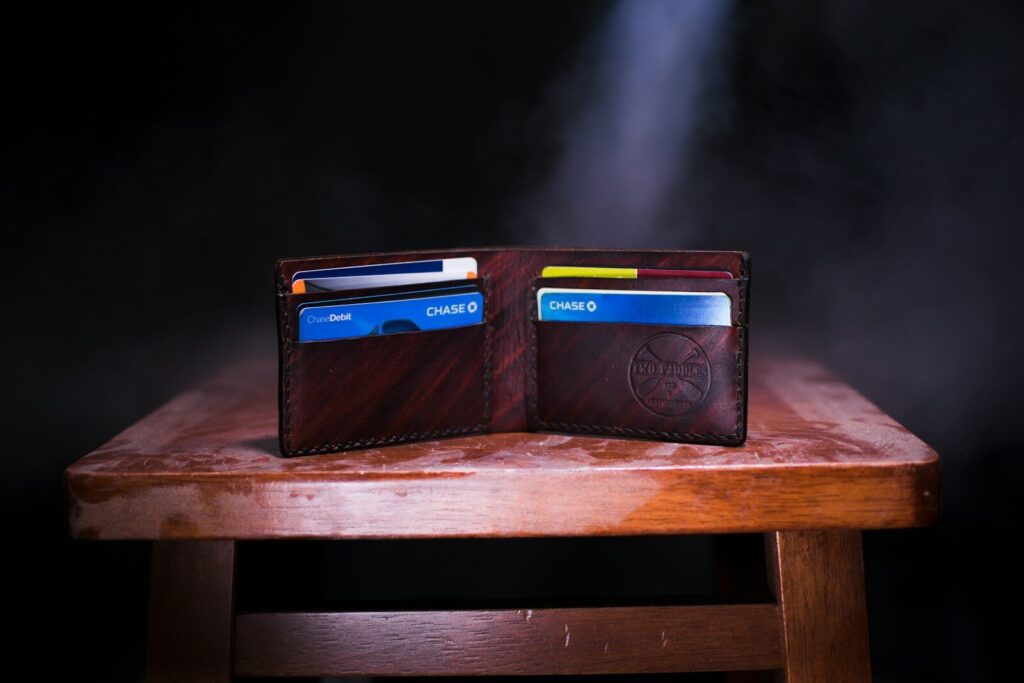
By the time I understood that human beings were experts at preparing for disasters they never expected and ignoring the ones standing patiently before them, I had already spent three years inside Kunle’s wallet.
The wallet itself was a small museum of his life. It smelled of worn leather, stale cologne and the faint metallic scent of coins that had long since disappeared. Every compartment carried a fragment of his existence. There were receipts from restaurants whose names had faded into ghostly blue ink, an old passport photograph in which he still wore the awkward confidence of a fresh graduate, several business cards from men who had promised opportunities they never intended to offer, and a folded prayer leaflet his mother had slipped into the wallet one Sunday after church. She had insisted he keep it close because, as she often said, “The world is more stubborn than prayer alone.”
I lay beneath the prayer leaflet.
Sometimes I wondered whether that was deliberate.
I had not always been so philosophical. When the pharmacist first placed me in a small paper bag and Kunle paid without bargaining, I felt almost honoured. Around me, the other packets had whispered excitedly about their futures. Some would never leave the pharmacy shelf. Others would spend years forgotten in bedside drawers. A fortunate few would fulfil the purpose for which we had all been made. Protection was not an exciting calling, but it was an important one. We existed for the briefest of moments, often unnoticed, yet entire futures depended upon our usefulness.
Kunle had seemed responsible.
He was twenty-nine then, a software consultant whose shirts were always neatly pressed, whose beard was trimmed every Saturday morning, and whose confidence arrived five minutes before he did. Friends admired him because he drove a modest car that was fully paid for, lived alone in a one-bedroom apartment in Lekki and could quote investment advice between jokes about Arsenal Football Club. Women liked him because he listened more than he spoke. Older relatives adored him because he still attended family weddings without complaining.
Everyone thought they knew him.
Perhaps they did.
Human beings are wonderfully complicated. A person can be generous enough to pay another man’s school fees and foolish enough to gamble with his own future before midnight.
My first weeks inside the wallet were filled with expectation. Every evening seemed to carry the possibility that my brief existence would finally acquire meaning. Kunle’s life unfolded through muffled conversations and the occasional glimpse of Lagos whenever daylight spilled into the wallet. I watched yellow danfo buses weave through impossible traffic, hawkers balancing pyramids of oranges on their heads, and the restless current of humanity flowing through the city as though Lagos itself possessed a heartbeat too powerful to slow down.
There were dates.
Many dates.
The wallet accompanied him to restaurants overlooking the lagoon, rooftop lounges where soft jazz competed with generators humming below, beachside bars where conversations dissolved into laughter after enough cocktails had been poured. More than once, I heard women laugh with that effortless freedom which belongs only to people who believe tomorrow will resemble today.
Each night I waited.
Each night Kunle reached for his wallet before leaving the car.
Each night his fingers brushed against me.
Each night they moved away.
At first I believed he had forgotten.
It took several months to realise forgetting requires absence of thought.
He was thinking about me.
He was choosing against me.
The conversations always sounded remarkably alike.
“It doesn’t feel natural.”
“We’re both clean.”
“It’ll just be this once.”
“We’re adults.”
Confidence is an astonishing architect. It constructs invisible bridges over very real cliffs.
As the years passed, girlfriends came and went with the rhythm of Lagos seasons. Ada preferred Abuja after receiving a promotion. Yewande wanted marriage before thirty. Sandra discovered someone wealthier. There were others whose names I learned only because they appeared on illuminated phone screens or because Kunle repeated them affectionately into the darkness after midnight.
He was never cruel.
Never violent.
Never dishonest about his intentions.
He simply believed consequences belonged to other people.
Occasionally someone would notice me when Kunle opened his wallet to pay for drinks.
“You still dey carry that thing?” one friend laughed.
Kunle would grin.
“Better to have it than not.”
Everyone laughed.
Including Kunle.
Only I understood the irony.
Having protection and using protection are cousins who rarely visit each other.
Years accumulated quietly.
The edges of my wrapper softened from being pressed between cards. The pharmacy expiry date crept closer. Even objects, it seems, can grow old while waiting to matter.
Then one Thursday evening everything changed without announcing itself.
There was no thunder.
No dramatic confession.
No suspicious phone call.
Only a persistent fever that refused to surrender, accompanied by nights so drenched in sweat that Kunle began changing his bedsheets every morning. He dismissed it as malaria. Lagos teaches people to blame malaria first and ask questions later.
The drugs accomplished nothing.
The fever remained.
Then came the weight loss.
Then the swollen glands.
His mother insisted on a proper hospital.
“I don’t like the way you’re looking,” she said over the phone.
He laughed.
“I’ll be fine.”
Mothers possess an uncomfortable relationship with certainty. They often recognise danger long before evidence arrives.
The hospital smelled of antiseptic and restrained anxiety. I remained inside the wallet while nurses drew blood and doctors spoke in reassuring voices that somehow increased everyone’s fear. Waiting became its own occupation. Test after test disappeared through swinging laboratory doors while Kunle scrolled endlessly through his phone, pretending distraction could delay reality.
When the results finally arrived, the consulting room became extraordinarily quiet.
The doctor studied the papers before lifting his eyes.
“There is something we need to discuss.”
There are sentences that divide a life into before and after.
Everything spoken after those words belonged to another version of Kunle.
The doctor explained patiently. Further confirmation had removed every doubt. The infection would remain with him for the rest of his life. Modern medicine had transformed it from a swift execution into a chronic condition. With consistent treatment he could expect many productive years. He would work, love, laugh and grow older.
But he would never be cured.
Kunle listened without interruption.
He asked intelligent questions.
He thanked the doctor.
He even smiled politely before leaving.
Human beings have remarkable manners for moments that are breaking them apart.
Only after reaching the car did the performance end.
He sat motionless behind the steering wheel while evening traffic crawled around the hospital gates. Horns blared. Hawkers knocked gently against windows offering bottled water and plantain chips. Somewhere nearby a preacher shouted through a loudspeaker that redemption remained available to everyone.
Kunle opened the wallet.
For the first time in years, he removed every card until only I remained.
His fingers trembled as he held me beneath the fading sunlight.
I was still sealed.
Still intact.
Still waiting.
His eyes filled before the first tear escaped.
“I carried you everywhere,” he whispered.
The words were not addressed to me alone.
They were spoken to every ignored warning, every unnecessary risk, every moment confidence disguised itself as wisdom.
For a long while he simply stared at me.
Then he laughed.
It was the saddest laughter I had ever heard because it contained no humour, only recognition. The kind that arrives too late to negotiate with the past.
Life after diagnosis unfolded differently.
Treatment became routine. Tablets replaced vitamins in his bedside drawer. Hospital appointments found permanent residence in his calendar. The illness did not end his life, but it rearranged it with ruthless efficiency. Some relationships quietly dissolved beneath the weight of uncomfortable conversations. Others deepened. His mother prayed more often. His younger brother stopped borrowing money and instead accompanied him to clinic visits without being asked.
The greatest change, however, was invisible.
Kunle stopped believing himself immune to consequence.
Whenever younger colleagues boasted about reckless adventures over Friday lunch, he interrupted gently.
“Don’t gamble with your health.”
They usually laughed.
He did not.
Sometimes he reached into his wallet and placed me on the table.
“I’ve been carrying this for years,” he would say. “The tragedy wasn’t that I didn’t have protection. The tragedy was believing I wouldn’t need it.”
The room always became quieter afterwards.
Months later, he bought a new wallet.
The old leather had cracked along the fold, worn thin by years of being opened with careless confidence and closed with unquestioning certainty.
As he transferred its contents, he paused when he reached me.
He turned me over in his hands, studying the faded wrapper that had travelled with him through victories, heartbreaks, promotions, birthdays and the single decision that would echo through the remainder of his life.
“You deserved better,” he murmured.
I understood what he meant.
Not that I deserved to be used.
Objects possess no pride.
What deserved better was the future we had once carried between us.
He placed me gently into the waste bin before slipping the prayer leaflet into his new wallet.
Outside, Lagos breathed as it always had.
Danfo conductors argued over passengers. Street vendors chased red lights with impossible optimism. Somewhere, lovers promised each other forever beneath a sky stained orange by the setting sun.
The city continued without pausing to mourn one man’s regret.
It always does.
Yet I have often imagined another wallet travelling through that same traffic, carrying another silent guardian wrapped in foil, waiting patiently in darkness.
Perhaps tonight its owner will remember that protection is not a confession of fear.
It is an act of respect for tomorrow.
Some futures are not destroyed by the absence of safety.
They are surrendered one confident decision at a time.