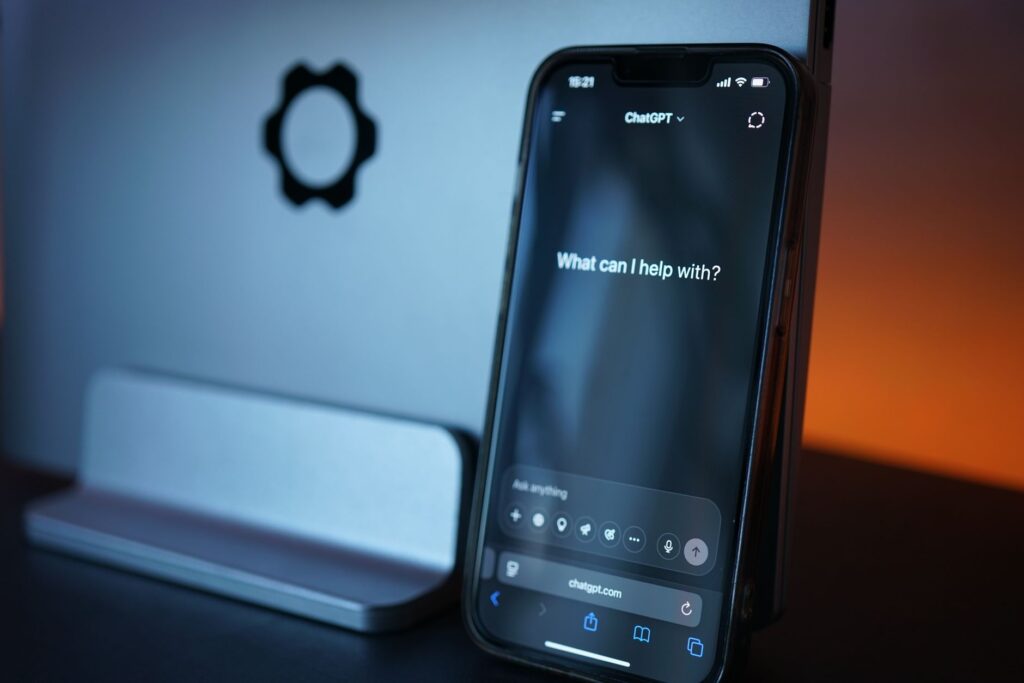
The first time Inspector Gbadamosi heard that ChatGPT had helped me solve a murder, he laughed.
“You mean this computer thing caught the killer?”
“No, sir,” I said. “It only helped me ask questions.”
He stopped laughing.
My uncle, Chief Olusegun Akinwale, had been dead for eleven days.
The doctors said cardiac arrest, and nobody found that difficult to believe. He was sixty-eight, diabetic, hypertensive, overweight and stubborn enough to consider medical advice a personal insult. His heart had finally failed him, they said.
At the funeral in Lekki, everybody mourned.
His wife, Bimbo, cried behind dark glasses. His eldest son, Kunle, spent most of the three days answering calls and meeting lawyers. My cousin Teni argued with everyone, including a pastor who said death was part of God’s plan.
My father said almost nothing.
I would have accepted the doctor’s explanation too, if not for the voice note.
My uncle had sent it to me on the night before he died. I was trapped in traffic on Third Mainland Bridge when it arrived, and I decided to listen to it later.
Later came after his burial.
The message lasted twenty-two seconds.
“Femi, call me when you see this,” he said.
There was a pause.
“I need you to help me check something.”
Another pause.
“I think somebody is lying to me.”
That was all.
For two days, I tried to forget it. Then, one sleepless night, I opened ChatGPT and explained what had happened.
I asked where I should begin.
It suggested a timeline.
So I made one.
Breakfast. Meetings. An argument with Kunle. Dinner. Medication. The voice note. Death.
Then I asked what I might have missed.
The answer was simple.
Which events can you independently confirm?
I went through the list again.
My uncle’s doctors could confirm his appointments. His secretary could confirm the argument with Kunle. A business partner could confirm their meeting.
But the medication?
According to Bimbo.
Finding him unconscious?
According to Bimbo.
For the first time, I understood the difference between what happened and what someone said had happened.
I returned to the house.
In my uncle’s study, I found his medication cabinet. One box was unfamiliar. I compared it with older photographs on his phone. The medication had appeared only days before his death.
His doctors had not prescribed it.
His regular pharmacy had not supplied it.
Then I found another photograph.
The medication box sat on the kitchen counter. In the dark reflection of the microwave door behind it was the blurred outline of someone standing nearby.
I uploaded the image and asked ChatGPT if it could identify the person.
It could not.
Instead, it advised me to focus on what could actually be observed.
There was a wristwatch.
Large. Metallic.
Kunle owned one like it.
That was not evidence.
So I called him.
“Where were you on the night Daddy died?”
“At home.”
“Did you return to the house?”
“No.”
I checked the security footage.
At 8:31 p.m., Kunle’s car entered the compound.
At 8:54, it left.
Twenty-three minutes.
He had lied.
That night, I found something else.
An unsent email on my uncle’s laptop.
He had been investigating missing money from one of his companies. Payments had gone to a supplier that did not exist. The money had eventually been traced to accounts connected to Kunle.
At the end of the email to his lawyer, my uncle had written:
I will deal with this before the end of the week.
He died on Wednesday.
For the first time, I believed I knew what had happened.
I typed everything into ChatGPT.
The medication.
The lie.
The security footage.
The missing money.
Then I asked if Kunle had killed his father.
The answer disappointed me.
It said I had evidence of suspicious circumstances, but not proof that they were connected.
It advised me not to confront anyone and to take the information to the police.
That was how I found Inspector Gbadamosi.
At first, he found the story of ChatGPT amusing.
Then I showed him the evidence.
The police investigated.
The medication was traced to a pharmacist who knew Bimbo. Financial records revealed payments connected to Kunle. Statements changed. People began accusing one another.
The truth came slowly.
Kunle had been stealing from his father’s company. My uncle had discovered it. That explained the argument and why Kunle returned to the house.
But Kunle was not the only person with something to hide.
Bimbo had her own secrets, and the medication had entered the house through a connection she had made with the pharmacist. The investigation uncovered a web of financial dealings, private arrangements and lies that had existed quietly around my uncle long before his death.
Nobody’s story remained intact.
By the time the case moved towards prosecution, the family had already broken apart.
Months later, Inspector Gbadamosi called me to his office.
He looked at the documents and then at my phone.
“So, your ChatGPT.”
“Yes.”
“You know it didn’t solve this case.”
“I know.”
“You solved nothing either.”
I looked at him.
He tapped the file.
“You noticed something. You asked questions. Then evidence did the rest.”
That night, I opened ChatGPT again.
Our conversation had grown into months of questions.
What am I missing?
How can I verify this?
What else could explain it?
I scrolled back to the first question I had asked.
Where should I begin?
For a long time, I stared at it.
My uncle had thought somebody was lying to him.
He had been right.
What neither of us understood was how many people were lying.
I closed the application and placed the phone on the table.
The machine had not solved the murder.
It had done something more ordinary.
It had kept me from falling in love with the first answer I found.
Outside, Lagos continued with its usual noise. Generators hummed. Cars argued with their horns. Somewhere in the darkness, somebody was probably telling a lie that sounded perfectly reasonable.
And somewhere else, perhaps, another person was opening a conversation with a machine and asking the first question.
Where should I begin?