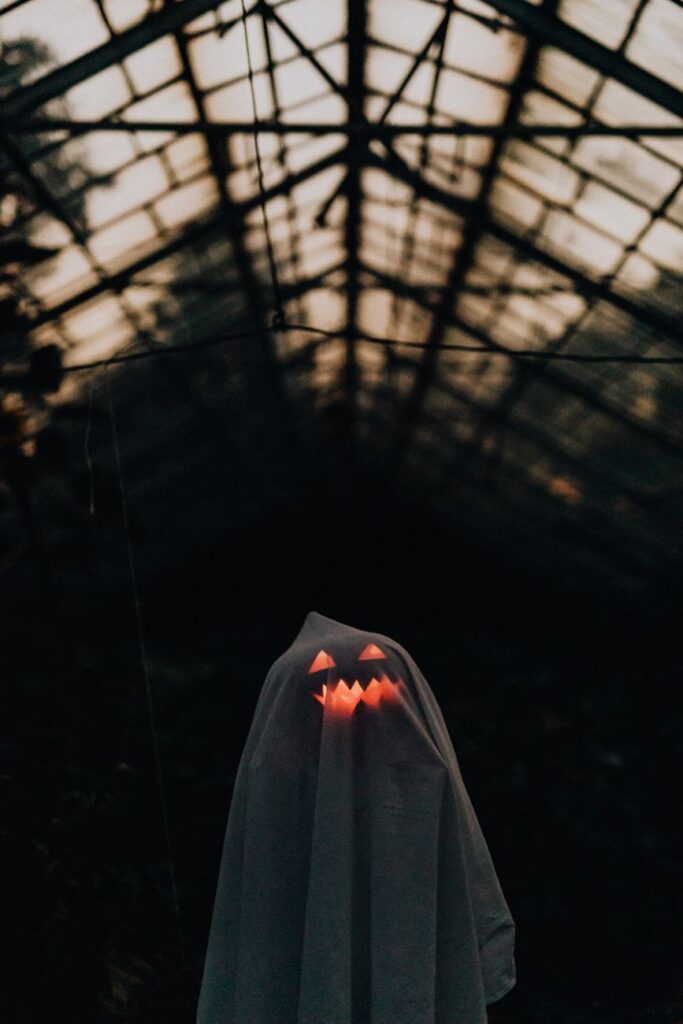
They say Lagos never sleeps, but in the quiet, tree-lined avenues of Ikoyi, some houses wake up only when the world goes dark.
This is the story of Number 14, Sunflower Lane. A massive, old colonial-style duplex, wrapped in a suffocating gloom. It had a damp, coastal mold creeping up its thick concrete walls, and old wooden windows that rattled like bones whenever the breeze from the nearby lagoon swept through. Inside, the architecture was a relic of old Lagos: high ceilings, aged terrazzo floors, and a dark, expansive roof space made of heavy wooden rafters, completely sealed off except for a single, heavy trapdoor in the hallway ceiling. It was a house with a reputation that made the locals cross to the other side of the street. They said it was haunted. They said the spirit of Funmi, a vibrant young woman who tragically drowned at a beach party months prior, was still wandering the corridors.
Because Funmi’s tragic death happened mid-year, her hefty Ikoyi rent was still fully active. The apartment sat there, filled with her clothes, her furniture, and her secrets.
Initially, Funmi’s grieving family didn’t want the expensive property and the active rent to go to waste, the family decided that Funmi’s younger cousin, Tokunbo, should move in. Tokunbo was a loud, confident Lagos boy. He didn’t believe in old wives’ tales.
He lasted exactly three weeks.
Tokunbo fled the house in the middle of the night, leaving his boxes behind. He sent frantic voice notes to the family WhatsApp group, weeping, swearing that he heard heavy, dragging sounds and rhythmic thumping coming from the ceiling space directly above his head. He claimed a cold, invisible hand had choked him in his sleep, and that the house reeked of Funmi’s favorite lemongrass perfume. Tokunbo’s terrifying stories cemented the rumor: Number 14 was a ghost house.
Then came Tolani.
Tolani was Funmi’s older sister, a sharp, brilliant software engineer just returning from London. But in the eyes of her traditional, image-conscious family, Tolani was the defiant black sheep. Her refusal to conform to societal expectations and her stubborn, uncompromising nature had led to a bitter falling out years ago, resulting in her exile outside the country. Funmi had been the golden child, the beloved favorite. When news of Funmi’s death reached London, Tolani refused to accept the official story.
She immediately began to investigate the circumstances surrounding the tragedy. However, she faced a brick wall at every turn. Her family, the police, and their social circle were all absolutely convinced that Funmi had simply drowned by accident during a late-night beach party. They dismissed Tolani’s persistent questions as the erratic, guilt-ridden behavior of an estranged sibling looking for drama.
Determined to uncover the truth her own way, and possessing the keys to her late sister’s active apartment, Tolani moved into Number 14.
The first week was quiet. But Lagos has a way of breaking your certainties.
The old colonial house itself felt alive, heavy with an oppressive, humid stillness. Then, the haunting Tokunbo spoke of began. It started at exactly 3:00 AM. A slow, rhythmic thumping and the distinct sound of something crawling along the ancient wooden rafters directly above Tolani’s bedroom ceiling.
Tolani blamed the neighborhood rats or the old plumbing.
Then came the scent. The unmistakable, sharp fragrance of lemongrass wafting through the hallway when the central air conditioning kicked on.
Next were the footprints. One morning, Tolani found a damp, wet patch on the living room rug, shaped exactly like a human foot, right beneath the hallway trapdoor.
Before taking any drastic steps, Tolani decided to meet up with Tokunbo at a café on Victoria Island to hear his side of the story directly. Tokunbo arrived looking gaunt and paranoid, a shadow of his former confident self. He grabbed Tolani’s hands, trembling, and amplified the terror. He swore that the entity wasn’t just making noise; it was actively hunting. He described how the air would turn freezing right before the thumping started, and how he felt a heavy, suffocating weight pressing down on his chest in the dead of night. He begged Tolani to pack her bags immediately, warning her that the spirit would eventually take her life just as it took Funmi’s.
Shaken but still clinging to her logic, Tolani met up with a few close friends later that evening to discuss what was happening, hoping someone would help her look at the facts rationally. As she recounted the footprints and the smells, one practical friend in the group stopped her and suggested that she thoroughly check the entire house from top to bottom, including any overlooked spaces, to ensure no intruder was slipping inside. Tolani immediately dismissed the idea. She explained that it was completely impossible. Every external door, window, and exit in the duplex was locked and barred with heavy iron burglary proofing. The keys were in her possession, and the main entrance was guarded day and night. There was absolutely nowhere an intruder could hide or enter from.
But the house kept pushing.
One night, the estate security guard swore he saw a woman in a white dress standing on the balcony, weeping into the night air. The next morning, Tolani woke up, walked into her bathroom, and froze. Written in the condensation on her mirror were four words: I am still here.
Fear is a powerful hallucinogen. The lack of sleep, the crushing weight of grief, and the eerie occurrences began to warp Tolani’s mind. She found herself talking to the empty rooms, staring up at the ceiling panels. She tracked down Femi, Funmi’s wealthy, socialite ex-boyfriend. When Femi heard that Tolani was experiencing the same things that chased Tokunbo away, he didn’t laugh. He turned pale. He trembled. The ghost was real to him, too.
Driven to the edge of sanity, Tolani finally caved. She invited a popular deliverance pastor to cleanse the house. But during the intense, sweating prayer session, a violent, deafening crash echoed from the dark ceiling space above them, as if something had broken through the panels. The pastor stopped praying, grabbed his Bible, and fled into the night, shouting about demons.
Tolani was utterly alone in the creaking duplex.
The silence in the house was heavy. Thick with the scent of lemongrass.
Suddenly, anger replaced her fear. If it was a ghost, she would face it. If it was a demon, it would have to look her in the eye.
Tolani dragged a heavy metal step-ladder into the hallway, positioning it right beneath the ceiling trapdoor. Armed with a flashlight and a heavy iron crowbar, she climbed up, pushed the heavy wooden square open, and pulled herself up into the pitch-black roof space.
Tolani shone her flashlight across the dusty wooden beams, ready for the supernatural.
But there was no spirit. There was no smoke.
Instead, the flashlight beam hit a makeshift setup laid out over the sturdy ceiling planks: a thin mattress, canned food, bottles of water, a laptop. And cowering in the shadows against the concrete firewall, holding her breath, was a living, breathing human being.
It was Kemi. Funmi’s best friend, who had mysteriously gone missing the exact same week Funmi died.
The haunting vanished in a flood of tears as Kemi confessed everything.
There were no ghosts in Number 14. There was only human desperation.
Kemi had been hiding up in the roof for months. She was the one carefully slipping down the trapdoor at night to scavenge for food. She was the one using the shower, leaving the wet footprints. She had used Funmi’s leftover lemongrass perfume to cover the smell of sweat and dust.
When cousin Tokunbo had moved in, Kemi had been terrified of being discovered. She intentionally played the part of a ghost to drive him out – making noise on the ceiling boards, dropping things, and even slipping down into his room to terrify him in the dark, which explained the weight he felt on his chest. She had written the message on the mirror to scare Tolani away, too. For her own safety.
Because the real monster wasn’t in the ceiling. The real monster was driving a luxury SUV through the streets of Victoria Island.
Kemi revealed the chilling truth, validating the suspicions that had brought Tolani back from her exile. Funmi didn’t drown by accident. She and Kemi had discovered that Femi, the wealthy ex-boyfriend, was running a massive cyber-fraud and ritual ring. Femi had Funmi killed to silence her, staging the drowning perfectly.
Tolani, horrified, asked the obvious question: “Why didn’t you go to the police? Why didn’t you call the EFCC?”
Kemi trembled. “Because Femi owns them. His uncles and friends head those departments. The moment I present this evidence locally, I am a dead woman.” Kemi had run for her life, hiding in the one place Femi’s highly superstitious crew would never dare to look – the “haunted” house of his dead victim, right above their heads.
The fog of superstition cleared from Tolani’s mind, replaced by a cold, sharp focus. She realized that inside the borders of Lagos, Femi was untouchable. But the family black sheep had global reach.
She didn’t call a local pastor. She didn’t call the local authorities.
Instead, Tolani downloaded the data from Kemi’s laptop and contacted a powerful, high-ranking colleague in London – an international cybersecurity expert with direct ties to Interpol and British intelligence.
They bypassed the compromised local channels entirely, mounting international pressure from the outside in. Foreign embassies were briefed, and international financial alerts were flagged against Femi’s overseas assets. Diplomatic weight was thrown behind the case, forcing the hands of the top brass in Abuja. Local compromised officials could no longer protect him without ruining themselves.
In the end, justice did not come from the spirit realm. It came from the law, enforced by global pressure. And as a heavily guarded, uncompromised tactical unit led Femi away in handcuffs, the neighborhood finally grew quiet.
Because in Lagos, the dead don’t haunt us. It is the living we must fear.